MON – FRI: 7:30AM – 5:30PM
- (714) 970-8774
- 801 South Lakeview Ave. Ste G Placentia, CA 92870
- MON – FRI: 7:30AM – 5:30PM
MON – FRI: 7:30AM – 5:30PM
A hybrid can feel perfectly normal right up until something small begins to change. Maybe fuel economy is not as good as it used to be. The gasoline engine seems to run more often. A warning light appears, the battery charge moves up and down faster than usual, or the brakes feel slightly different. Those changes do not automatically mean the hybrid battery is failing.
Hybrid vehicles combine a gasoline engine with electric motors, a high-voltage battery, power electronics, regenerative braking, cooling systems, and conventional components that still need routine care. Because several systems work together, guessing at the cause can lead to unnecessary repairs. At Yorba Linda Auto Service, the better approach is simple: diagnose first, then maintain or repair what the vehicle actually needs. Good hybrid car maintenance helps drivers in Placentia, Yorba Linda, Anaheim Hills, Brea, Fullerton, and nearby Orange County communities protect efficiency, reliability, and long-term performance.
The best hybrid maintenance plan starts with the schedule written for your specific make and model. A Toyota Prius, Honda Accord Hybrid, Lexus hybrid, Ford hybrid, and Hyundai hybrid may share some basic needs, but their service intervals and system designs are not identical. Oil type, coolant requirements, spark plug intervals, transmission fluid recommendations, battery-cooling service, and inspection procedures can differ.
That is why mileage alone should not be used to guess what your hybrid needs. Regular hybrid car service should combine the manufacturer’s schedule with the vehicle’s age, mileage, driving conditions, service history, and current condition. That gives you a maintenance plan based on evidence instead of assumptions.
One of the reasons people choose hybrids is fuel efficiency, so a noticeable drop in miles per gallon deserves attention. Sometimes the cause is simple. Low tire pressure, worn tires, poor alignment, a dirty air filter, overdue engine maintenance, or changes in driving conditions can affect economy. In other cases, the gasoline engine may be running more often because the hybrid system is not operating as efficiently as it should.
A weak 12-volt battery, battery temperature issue, sensor problem, or developing high-voltage battery concern may also influence how the system behaves. The important part is not to jump straight to “the hybrid battery is bad.” Proper hybrid diagnostics can look at system data, warning codes, battery performance, temperatures, and other operating information to determine what is actually happening.
The high-voltage battery is one of the most important components in a hybrid, and heat is one factor that can affect battery life. Many hybrids use cabin air to help cool the battery. Depending on the vehicle, there may be an intake vent, fan, ductwork, or filter that needs to remain clear. Pet hair, dust, luggage, or debris around the air intake can reduce airflow.
You do not need to take the battery system apart yourself. High-voltage components should be left to technicians who understand how to work around them safely. A sensible hybrid battery maintenance routine focuses on keeping cooling paths clear, following manufacturer recommendations, and investigating unusual battery temperatures or performance before they develop further. At Yorba Linda Auto Service, hybrid battery testing can be part of a broader evaluation rather than treating battery replacement as the first answer.
A hybrid still has an internal combustion engine, even if it does not run all the time. That engine still needs clean oil, proper coolant, filters, spark plugs, and other scheduled services. In many hybrids, the engine starts and stops frequently as the vehicle switches between electric and gasoline power. Using the correct oil and following the recommended service interval remains important.
Routine oil change service helps protect internal engine components from heat, friction, and contamination. Do not assume that driving on electric power for part of every trip means engine maintenance can be stretched indefinitely. Time can matter as well as mileage, especially for drivers who make frequent short trips.
Hybrid vehicles can have more cooling needs than a conventional gasoline-powered car. The engine has to stay within its proper temperature range, but some hybrids also use separate cooling circuits for components such as the inverter or electric drive system. The exact design depends on the vehicle.
Low coolant, leaks, aging hoses, restricted airflow, or another cooling-system problem can affect performance and may lead to more serious damage if ignored. If a temperature warning appears or you notice coolant loss, do not simply top off the reservoir and assume the problem is solved. Find out why the level dropped. Regular car maintenance service gives technicians an opportunity to inspect fluid condition, leaks, hoses, tires, brakes, and other components while the vehicle is still operating normally.
Hybrid braking systems work differently because regenerative braking can use the electric motor to slow the vehicle while recovering energy. That reduces how often the conventional friction brakes do all the work, which can help brake pads last longer. Longer pad life, however, does not mean the brake system should be ignored.
Brake fluid still ages. Calipers can stick. Rotors can develop corrosion, particularly when friction brakes are used less frequently. Pads, hoses, and other brake components still need inspection. If braking begins to feel grabby, inconsistent, noisy, or simply different from normal, the cause should be diagnosed. The problem could involve conventional brakes, regenerative braking, electronic controls, or a combination of systems.
Hybrid owners often focus on the large traction battery and forget about the smaller 12-volt battery. That smaller battery powers computers and helps the vehicle initialize its electrical systems. When it becomes weak, you may see unusual warning messages, intermittent electrical behavior, or a hybrid that will not enter its normal ready mode.
A weak 12-volt battery can sometimes create symptoms that look much more complicated than they really are. Testing the battery before replacing other components is another example of why diagnosis matters. A basic electrical problem should not automatically be confused with high-voltage battery failure.
A hybrid system warning light, check engine light, battery warning, temperature warning, or brake warning is information from the vehicle. It is not a complete diagnosis. A trouble code tells a technician where to begin testing. It does not always identify the exact part that needs replacement.
For example, a warning related to battery performance could involve temperature, cooling, wiring, sensors, battery condition, or another system. A check engine light could come from the gasoline engine or emissions system rather than the hybrid drive components. Yorba Linda Auto Service’s check engine light repair and diagnostic service goes beyond simply reading a generic trouble code. Testing related components and reviewing vehicle-specific information helps identify the root cause before repairs are recommended.
Skipping maintenance rarely causes every component to fail at once. More often, smaller problems are allowed to build. Low or deteriorated engine oil can increase wear. Aging coolant can reduce protection. A restricted battery-cooling path can contribute to higher temperatures. Worn tires or incorrect tire pressure can hurt fuel economy. Brake components can deteriorate even when regenerative braking reduces normal pad wear.
Ignoring warning lights can also remove the opportunity to address a problem while it is still limited. The goal of preventive hybrid car maintenance is not to replace parts early. It is to inspect, test, and service the vehicle at sensible intervals so you can make informed decisions before a smaller concern becomes a larger repair.
A well-maintained hybrid is easier to evaluate because its basic service needs are already under control. When oil, cooling systems, tires, brakes, filters, fluids, and batteries are regularly checked, a new symptom stands out more clearly. That gives technicians better information when something changes.
Maintenance records help too. Knowing when fluids, spark plugs, filters, brakes, and batteries were last serviced can prevent duplicate work and make it easier to determine what is actually due. Yorba Linda Auto Service has been serving local drivers since 2000. With ASE-certified technicians and experience working on domestic, Asian, European, and hybrid vehicles, the focus is on explaining what the vehicle needs, answering your questions, and recommending service based on its actual condition. That approach makes hybrid vehicle maintenance easier to understand and easier to plan.
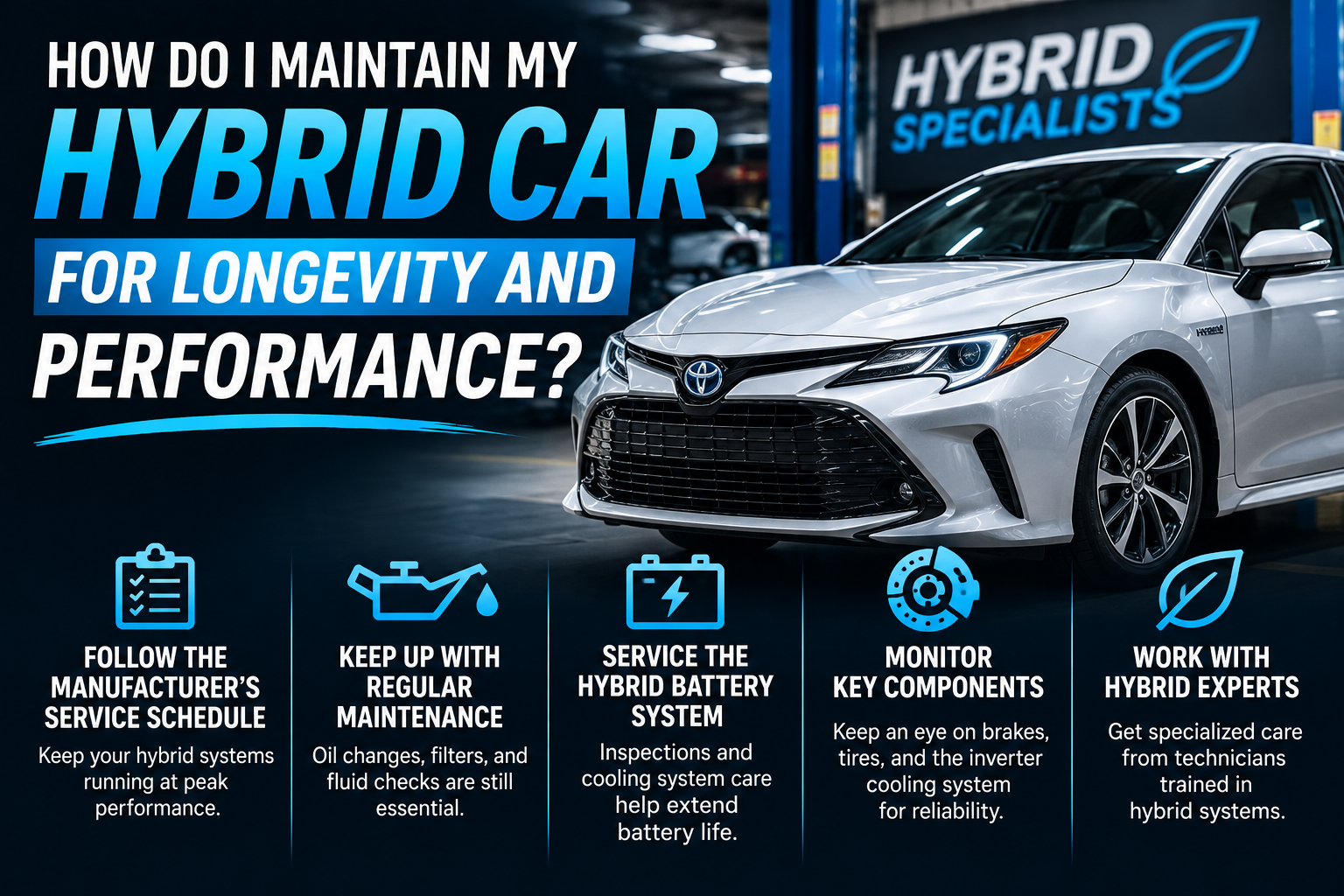
Follow the maintenance schedule for your specific make and model. Hybrids still need routine oil changes, fluid inspections, tire service, brake inspections, filters, and other scheduled maintenance. Some models also have hybrid-specific battery cooling and electrical system checks.
Keep battery cooling vents clear, follow the manufacturer’s maintenance recommendations, and have unusual battery behavior diagnosed. Because excessive heat can affect battery performance and life, proper cooling is important.
Hybrid gasoline engines still require oil changes even though they may not run continuously. Follow the manufacturer’s mileage and time recommendations instead of extending service simply because the car sometimes runs on electric power.
Watch for reduced fuel economy, hybrid or check engine warning lights, unusual battery charge behavior, the gasoline engine running more frequently than normal, poor acceleration, unusual noises, braking changes, or difficulty getting the vehicle into ready mode.
Regenerative braking can reduce friction brake wear, but the conventional braking system still needs inspection. Brake fluid, rotors, pads, calipers, hoses, and related components can still wear or deteriorate.
Not without testing. Lower fuel economy can have many causes, including tire pressure, alignment, engine maintenance, driving conditions, battery temperature, sensors, or battery condition. Diagnose the vehicle before deciding that battery replacement is necessary.
If your hybrid is losing fuel economy, showing a warning light, running differently, or simply due for scheduled maintenance, let Yorba Linda Auto Service take a closer look before a small concern becomes a larger one. We will inspect the vehicle, explain what we find, and help you prioritize the service that actually makes sense.