MON – FRI: 7:30AM – 5:30PM
- (714) 970-8774
- 801 South Lakeview Ave. Ste G Placentia, CA 92870
- MON – FRI: 7:30AM – 5:30PM
MON – FRI: 7:30AM – 5:30PM
Your car feels a little shaky at a stoplight. Later, it hesitates as you accelerate onto the freeway. Someone suggests new spark plugs, but you’re wondering whether that will solve the problem or just add another expense. That’s a reasonable question. Spark plugs can affect how smoothly your engine runs, but several other problems can cause similar symptoms.
The right time for spark plug replacement is when your vehicle’s manufacturer recommends it, or when testing confirms the plugs are worn, damaged, or fouled. Symptoms deserve diagnosis before parts are replaced. At Yorba Linda Auto Service, we help Placentia and Yorba Linda drivers understand what their vehicles need and why. Our approach starts with your concern, your maintenance history, and the evidence.
There isn’t one spark plug replacement interval that applies to every vehicle. The correct timing depends on your engine, the specified plug design, and the manufacturer’s service schedule. Check the maintenance information for your exact year, model, and engine. A recommendation for another vehicle, even one from the same brand, may not apply.
If you bought your car used, review the service records. Knowing when the plugs were last replaced is more useful than assuming they’re original or recently serviced. Scheduled replacement doesn’t require waiting for a misfire. When the plugs reach their recommended interval, replacing them is preventive maintenance. When a problem appears earlier, testing helps explain why.
Spark plugs ignite the air-and-fuel mixture inside a gasoline engine. Each plug must produce a reliable spark at the right point in the combustion cycle. With normal use, the electrodes gradually wear. That wear can widen the gap the spark must cross, making reliable ignition more difficult. DENSO identifies electrode erosion as a primary reason plugs eventually need replacement.
Plugs can also develop deposits or suffer damage. Their condition may reveal clues about another engine problem, so an inspection should consider more than whether they look old. The goal is dependable combustion and normal engine performance. Replacing healthy plugs early doesn’t automatically make a properly running engine more powerful.
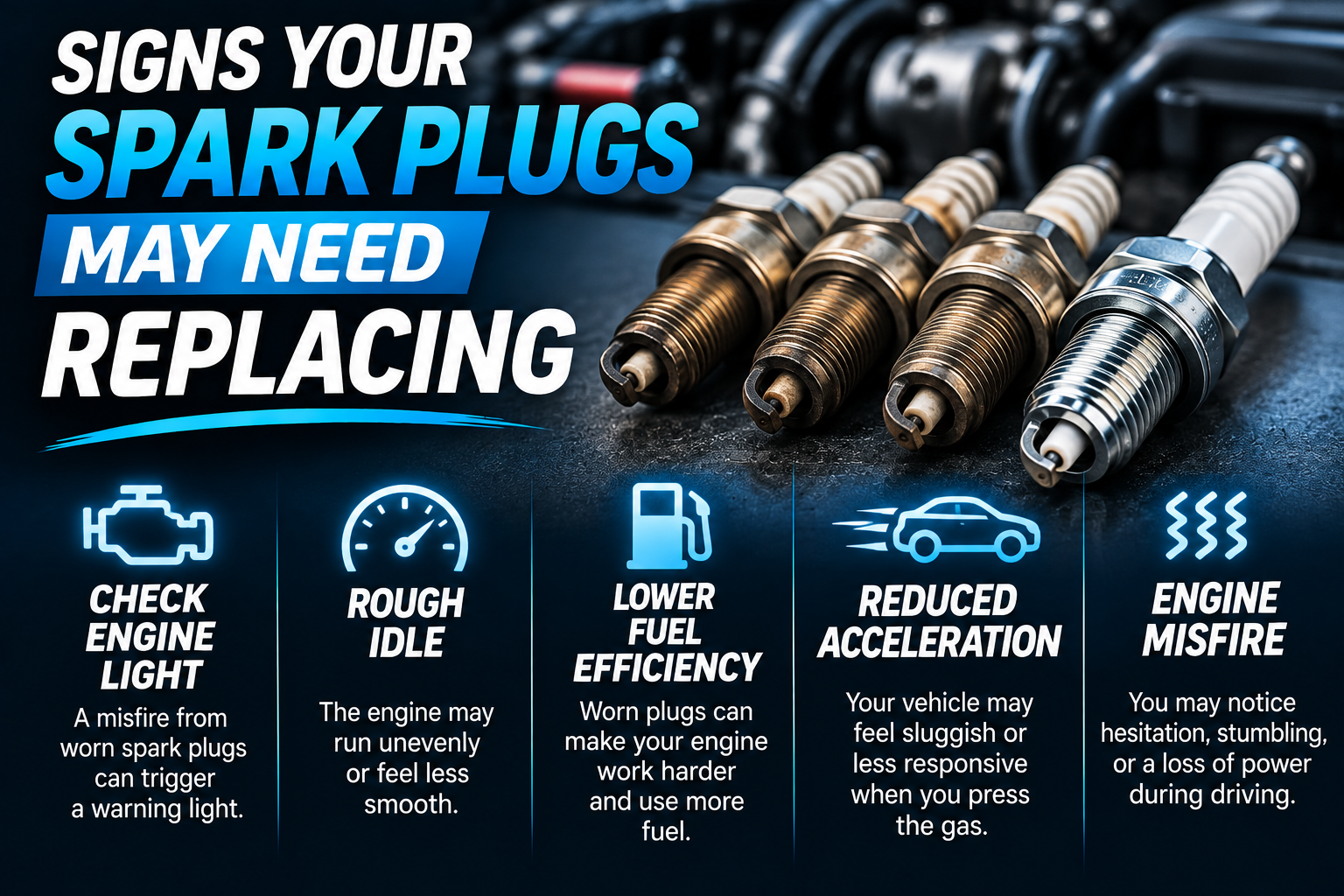
Worn spark plugs can contribute to rough running, misfires, and starting difficulties. However, those symptoms alone don’t confirm that the plugs are responsible. You might notice shaking at idle, hesitation during acceleration, or an engine that takes longer to start. A check engine light may appear alongside the change.
Tell your service advisor when the symptoms occur. Does the shaking happen only after a cold start? Is hesitation more noticeable uphill? Did the concern begin suddenly or develop over several weeks? These details help guide testing. Even a brief symptom description can be useful when an intermittent problem isn’t present during the initial inspection.
An engine misfire means combustion isn’t occurring properly in one or more cylinders. Spark plugs are one possible cause, but ignition coils, fuel delivery, air leaks, and mechanical engine problems also need consideration. For example, a faulty coil can prevent a good plug from firing correctly. Replacing that plug alone would leave the underlying problem unresolved.
A plug coated with oil or heavy deposits may also point beyond routine wear. NGK notes that deposits can be influenced by oil leakage, fuel quality, and engine operating conditions. That’s why “try a set of plugs” isn’t always a complete repair plan. A useful recommendation explains what testing found and how the proposed work addresses it.
Diagnosis starts with listening to your concern and reviewing the vehicle’s history. The technician can then inspect relevant components and use scan data to narrow down the issue. A misfire code identifies a condition the vehicle detected. It doesn’t, by itself, prove that a spark plug has failed.
Depending on the findings, testing may involve plug condition, coil operation, electrical connections, fuel delivery, or compression. The process should follow the evidence rather than replace everything at once. Yorba Linda Auto Service lists spark plug replacement, check engine light repair, and engine repair among its automotive services. Bringing maintenance and diagnostic information together helps us recommend the appropriate work.
A mild symptom still deserves attention, but a flashing check engine light needs a different response from routine maintenance. Manufacturer guidance warns that a flashing engine light can indicate a misfire capable of damaging the catalytic converter. That warning doesn’t identify which component caused the misfire.
If the light flashes, especially with shaking or loss of power, ease off the accelerator and move to a safe location. Seek repair guidance before continuing; towing may be appropriate. Don’t keep driving to see whether the problem clears. Follow your owner’s manual and describe the warning and symptoms when contacting the shop.
As a spark plug’s gap expands through wear, producing a spark requires more voltage. NGK explains that worn plugs can waste fuel and place additional strain on the ignition system. Delaying confirmed maintenance can leave you with rough running, unreliable starting, or a developing misfire. Addressing the problem early helps protect reliability without assuming every worn plug will cause major damage.
The practical benefit is restoring proper operation when the plugs are actually due or defective. If another fault is responsible, diagnosing it first helps avoid paying for a service that won’t solve your concern.
Spark plugs need to match the engine’s specifications. The correct design, heat range, and gap matter more than choosing a product described as an upgrade. NGK notes that an incorrect gap can contribute to misfires, power loss, and poor fuel economy. Installation should follow the vehicle and plug manufacturer’s requirements.
Related components should be inspected, but that doesn’t mean every ignition coil needs replacing with the plugs. Additional work should have a clear reason. After repairs, verification matters. The technician should check whether the original concern has been resolved and explain any findings that still need attention.
Keep your service invoice so the replacement date, mileage, and installed parts are documented. That record makes future maintenance decisions easier. When you’re unsure what’s due, bring your records and ask for a review against the manufacturer’s schedule. You should understand which items are scheduled maintenance and which recommendations come from an inspection.
Our team at Yorba Linda Auto Service has served local drivers since 2000. Our ASE-certified technicians continue their training, and we explain recommendations so you can make informed decisions without unnecessary pressure.
Follow the manufacturer’s schedule for your exact vehicle and engine. Replacement intervals vary. If records are missing or symptoms appear before the scheduled interval, an inspection can help determine the next step.
Yes, worn or fouled plugs can contribute to rough idle. Faulty coils, air leaks, fuel problems, and other conditions can cause similar shaking, so testing should confirm the cause.
No. If the plugs have reached their scheduled replacement interval, service can be appropriate even when the car feels normal. Preventive maintenance helps you avoid relying on symptoms as your only reminder.
They may restore fuel economy lost because of worn or malfunctioning plugs. They won’t necessarily improve mileage beyond normal performance, and other causes of increased fuel use may need investigation.
Not automatically. Coils should be tested or inspected as appropriate. Replacing them alongside spark plugs should be based on their condition, diagnostic findings, or applicable service requirements.
Contact the shop and explain what happened. A returning warning needs reassessment. It may involve the original concern or a separate fault, and the symptoms alone won’t establish which.
A smoother drive starts with understanding what your engine needs. Bring us your maintenance questions, rough idle, or acceleration concerns. We’ll explain the findings and help you plan the appropriate service. You deserve clear answers and car care that fits your everyday life.